How to Cast PowerPoint to Chromecast: A Step-by-Step Guide
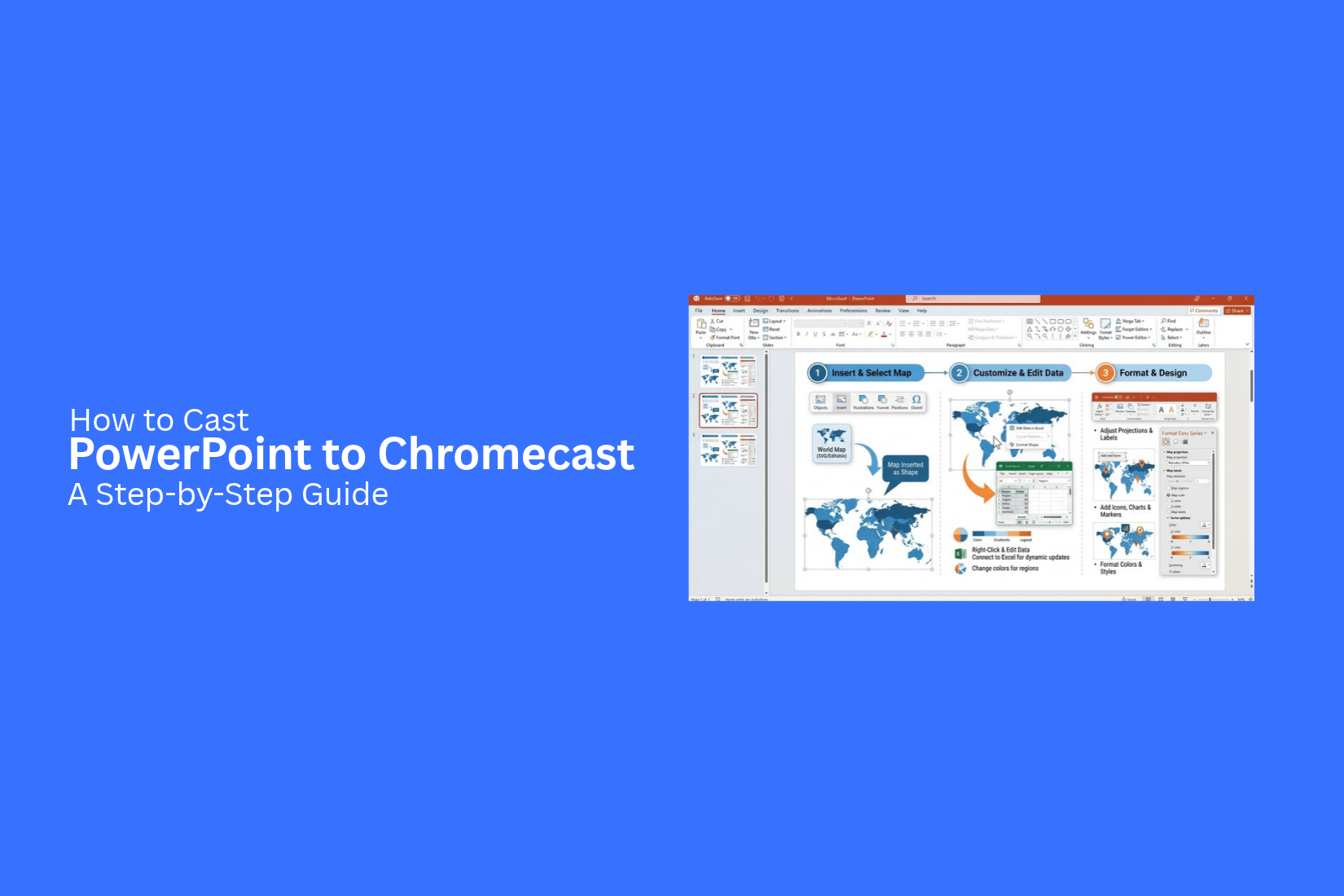
Giving a PowerPoint presentation on a TV can be hard if you do not know how to connect your device to Chromecast. You may have slides ready for a meeting or class, but getting them on the big screen can take extra time. A poor connection or the wrong display settings can also interrupt your presentation.
The good news is that you do not need to make the process harder than it is. With the right setup, you can cast your slides to a TV using Chromecast. This guide explains what you need before you start and shows you how to cast PowerPoint from a computer or mobile device. You will also learn how to fix common casting problems and keep your slides clear during your presentation.
What Is Chromecast and How Does It Work With PowerPoint?
Chromecast is a device that lets you show content from your computer or phone on a TV. It connects to your TV through an HDMI port and uses your Wi-Fi network to receive content.
You can use Chromecast to display a PowerPoint presentation on a larger screen. This is useful for meetings, classroom lessons, and group presentations. Your audience can view the slides on the TV instead of looking at your computer screen.
PowerPoint does not have a built-in Chromecast option. You can use Google Chrome to cast your screen or browser tab to a Chromecast-connected TV. Screen casting shows your computer display, while tab casting shares content from a Chrome tab.
Before you start, connect your computer and Chromecast to the same Wi-Fi network. Make sure Chromecast is set up and working. Then, open your PowerPoint presentation and choose a casting method that fits your needs.
Why Cast a PowerPoint Presentation to Chromecast?
Casting a PowerPoint presentation to Chromecast lets you show your slides on a larger screen. You can present from your computer or mobile device and display your slides on a TV or projector with Chromecast support.
Here are a few reasons to cast your PowerPoint slides:
1. Show slides on a large screen: A TV makes your text, charts, and images easier for a group to see.
2. Present without extra cables: Chromecast lets you send content over a Wi-Fi network. This can reduce the need for a direct cable connection.
3. Share ideas with a group: You can use a larger display for team meetings, classroom lessons, or client presentations.
4. Present from different devices: You can cast from a compatible computer, phone, or tablet, depending on the method you use.
5. Make meetings easier to follow: A shared screen helps everyone focus on the same slides during a discussion.
Casting can make it easier to share your work with a group. The next step is to learn how Chromecast works with PowerPoint and what you need before you start.
What You Need Before Casting PowerPoint to Chromecast
Before casting a PowerPoint presentation, make sure you have the right devices and software. You need a Chromecast device or a TV with Chromecast built in. You also need a computer or mobile device, a stable Wi-Fi connection, and a compatible browser. These items help you send your slides to a larger screen.
A Chromecast Device or Chromecast-Enabled TV
You need a Chromecast device connected to your TV or a TV with Chromecast built in. This lets you display content from a compatible device on your TV screen. Check that your Chromecast is set up and ready to use before you start.
A Computer or Mobile Device
You can use a computer, phone, or tablet to cast your presentation. A computer is often a good choice for PowerPoint slides. It gives you more control over your presentation and lets you switch between slides with ease. Make sure your device supports casting.
A Stable Wi-Fi Connection
Your casting device and Chromecast must connect to the same Wi-Fi network. A stable connection helps your slides appear on the TV without long delays or sudden drops. Check your Wi-Fi before starting the presentation. Close apps or downloads that may use too much network bandwidth.
PowerPoint and a Compatible Browser
Keep your PowerPoint presentation ready on your device. You can open it in the PowerPoint app or use a supported web version. A compatible browser, such as Google Chrome, can help you cast your screen or browser tab to Chromecast.
Check that your slides display correctly before casting. Review the text, images, charts, and animations. This quick check can help you avoid display issues during your presentation.
How to Cast a PowerPoint Presentation to Chromecast
You can cast a PowerPoint presentation to your TV or display using Google Chromecast. This lets you show your slides on a larger screen without connecting your computer to the TV with an HDMI cable. You need a device with your PowerPoint file, a Chromecast device, and a Wi-Fi network.
Follow these steps to cast your presentation.
Connect Your Device and Chromecast to the Same Wi-Fi Network
Start by connecting your computer and Chromecast to the same Wi-Fi network. This allows your computer to find the Chromecast device. Check that both devices use the same network name. A guest network or a separate Wi-Fi connection may prevent them from connecting.
Open Your PowerPoint Presentation
Open your PowerPoint file on your computer. You can use the PowerPoint desktop app or open the file in a compatible browser. Check your slides before casting. Make sure the text is readable and the images appear correctly. Keep the presentation ready so you can start the slideshow after connecting to your TV.
Cast Your Screen Using Google Chrome
Google Chrome has a built-in casting feature. You can use it to share your computer screen with a Chromecast device.
Follow these steps:
- Open Google Chrome on your computer.
- Select the three-dot menu in the top-right corner.
- Choose Cast, save, and share or Cast, based on your Chrome version.
- Select the option to cast your screen or entire desktop.
The available options may vary by Chrome version. Choose the option that lets you share your full screen so your PowerPoint slideshow can appear on the TV.
Select Your Chromecast Device
After opening the casting menu, look for your Chromecast device in the list. Select the device connected to your TV. Give it a few seconds to connect. Your computer screen should appear on the TV once the connection is ready. If your Chromecast does not appear, check your Wi-Fi connection and make sure the device is powered on. You can also close the casting menu and open it again.
Start the PowerPoint Slideshow
Once your computer screen appears on the TV, return to PowerPoint. Open the Slide Show tab and select From Beginning to start your presentation. Your slides should now appear on the larger screen. Use your keyboard or presentation controls to move between slides. Keep an eye on your computer screen to manage the slideshow and check your progress. Before presenting to an audience, test the setup. Check the text size, images, animations, and video playback. This helps you spot display issues before your presentation begins.
How to Cast PowerPoint to Chromecast From Different Devices
You can cast a PowerPoint presentation to Chromecast from a Windows PC, Mac, Android device, iPhone, or iPad. The steps vary by device. Your device and Chromecast must also be connected to the same Wi-Fi network.
Cast PowerPoint From a Windows PC
A Windows PC lets you run PowerPoint on your computer and show your slides on a TV. You can use Google Chrome to cast your screen.
- Connect your Windows PC and Chromecast to the same Wi-Fi network.
- Plug Chromecast into your TV and select the correct HDMI input.
- Open Google Chrome on your PC.
- Click the three-dot menu in the top-right corner.
- Select Cast, save, and share, then click Cast.
- Choose your Chromecast device from the list.
- Select the option to cast your entire screen, if available.
- Open your PowerPoint file and start the slide show.
Your slides should now appear on your TV. Keep PowerPoint open on your PC during the presentation. You can use your mouse or keyboard to move between slides.
Cast PowerPoint From a Mac
A Mac can also display PowerPoint slides on a Chromecast-connected TV. Google Chrome provides a way to share your screen.
- Connect your Mac and Chromecast to the same Wi-Fi network.
- Open Google Chrome on your Mac.
- Click the three-dot menu in the top-right corner.
- Select Cast, save, and share, then choose Cast.
- Select your Chromecast device.
- Choose the option to share your entire screen, if available.
- Open PowerPoint and select the presentation you want to show.
- Start the slide show.
Your presentation should appear on the TV. Keep your Mac nearby so you can control the slides during your talk.
Cast PowerPoint From an Android Device
Android devices offer a screen-casting option on many models. You can use this feature to display your PowerPoint slides on a TV connected to Chromecast.
- Connect your Android device and Chromecast to the same Wi-Fi network.
- Open the Google Home app.
- Select your Chromecast device.
- Look for the Cast my screen or Cast screen option.
- Confirm the screen-casting request on your device.
- Open the PowerPoint app.
- Select your presentation and start the slide show.
Your phone screen should now appear on the TV. Rotate your phone to landscape mode for a wider view of the slides. Keep your phone charged if you plan to give a long presentation.
Note: The screen-casting option may vary by Android model and software version.
Cast PowerPoint From an iPhone or iPad
Casting from an iPhone or iPad works differently from casting on Android. Chromecast does not support Apple's AirPlay feature directly. You may need a compatible casting app that supports screen mirroring to Chromecast.
- Connect your iPhone or iPad and Chromecast to the same Wi-Fi network.
- Set up Chromecast on your TV.
- Open the App Store and look for a casting app that supports Chromecast screen mirroring.
- Install the app and follow its setup steps.
- Select your Chromecast device in the app.
- Allow screen sharing or mirroring if your device asks for permission.
- Open the PowerPoint app and select your presentation.
- Start the slide show and check that the slides appear on your TV.
The available steps and features depend on the casting app you use. Some apps may require a paid plan or may not mirror all content. Test the setup before your presentation to avoid delays.
How to Cast PowerPoint Using Google Slides
Google Slides lets you open and present PowerPoint files in a web browser. You can use this method to show your slides on a TV with Chromecast. Start by uploading your PowerPoint file to Google Slides. Then open the presentation in your browser and cast the tab to your TV.
Upload Your PowerPoint File to Google Slides
First, upload your PowerPoint file to Google Drive. You can do this from your computer.
- Open Google Drive in your browser.
- Click New in the top-left corner.
- Select File upload from the menu.
- Find your PowerPoint file on your computer and upload it.
- Wait for the upload to finish.
Next, find the uploaded file in Google Drive. Right-click it and select Open with > Google Slides. Your presentation will open in Google Slides. Check the slides for any changes to the layout, fonts, images, or other elements.
Open the Presentation in Your Browser
After opening the file in Google Slides, check that the presentation is ready to show.
- Review the slides and make sure the content looks correct.
- Fix any layout issues or missing elements.
- Check that your computer and Chromecast are connected to the same Wi-Fi network.
- Open the presentation in Google Slides in your browser.
- Click Slideshow in the top-right corner to start presenting.
Your slides are now ready to display. Keep the browser open so you can cast the presentation to your TV.
Cast the Browser Tab to Chromecast
With your presentation open, use the browser's cast feature to send the slides to your TV.
- Make sure your Chromecast is connected to your TV and powered on.
- Open Google Chrome on your computer.
- Click the three-dot menu in the top-right corner.
- Select Cast, save, and share or Cast, depending on your Chrome version.
- Wait for Chrome to find available devices.
- Select your Chromecast from the device list.
- Choose the browser tab that contains your presentation, if prompted.
Your browser tab should now appear on your TV. Start the slideshow in Google Slides to display your presentation in full-screen mode.
A quick tip: Close any tabs with private information before casting. This helps prevent other people from seeing content you do not want to share. Also, keep your computer nearby so you can control the slides during your presentation.
How to Improve Your PowerPoint Presentation While Casting
A PowerPoint presentation may look different on a TV than it does on your computer. Small text, missing sounds, or poor image quality can affect the viewing experience. A few checks before you start can help your slides look clear on a larger screen.
Check Slide Layouts and Text Size
Review each slide before casting your PowerPoint to Chromecast. Make sure the text is easy to read from a distance. Use large fonts for headings and body text. Keep each slide simple and avoid placing too much text in a small area. Check the space between text, images, and other elements. Make sure nothing overlaps or gets cut off at the edges. Use clear colors for the text and background. These changes help viewers follow your main points without straining their eyes.
Test Videos, Audio, and Animations
Videos, audio clips, and animations can add movement to your presentation. Test them before sharing your screen. Play each video to check its picture and sound. Make sure audio clips start and stop at the right time. Review your animations as well. Check the order of each effect and make sure the content appears as planned. A short test run can help you spot playback issues before your audience sees them.
Adjust Screen Resolution and Display Settings
Your computer's display settings can affect how PowerPoint looks on a TV. Check the screen resolution and display mode before casting. Choose a resolution that works well with your TV. Make sure the slide content fits the screen without being cut off. If the TV shows a black border or leaves empty space around the slides, check the display settings on your computer and TV. You may need to adjust the screen size or aspect ratio. Test the changes with a few slides to confirm that the text and images look clear.
Keep Presenter Notes Private
Presenter notes help you remember key points during a talk. However, you may not want your audience to see them on the TV. Check what appears on the cast screen before you begin. If you use PowerPoint's Presenter View, confirm that your notes stay on your computer while the audience sees only the slides. The exact setup may depend on your computer and casting method. Run a quick test before the presentation starts. Open a slide with notes and check the TV display. This simple step helps you avoid sharing private notes or other content by mistake.
Common Problems When Casting PowerPoint to Chromecast
Casting a PowerPoint presentation to Chromecast may not always work as planned. Your device may not appear in the cast list. Slides may look different on the TV. Audio, video, or screen sharing may also stop working. Most of these problems have simple fixes. Check each issue below to find the right solution.
Chromecast Device Does Not Appear
Your Chromecast device may not appear in the cast list. This can happen if your computer and Chromecast use different Wi-Fi networks. It may also happen if the device is not ready to receive a cast.
Try these steps to fix the issue:
- Check that your computer and Chromecast are connected to the same Wi-Fi network.
- Make sure Chromecast is powered on and connected to the TV.
- Restart your browser and open the cast menu again.
- Restart Chromecast and check the device list.
- Check your browser settings to make sure casting is available.
Open the cast menu again after checking these settings. Your Chromecast should appear in the list if the connection is working.
PowerPoint Slides Do Not Display Correctly
Your slides may look different on the TV than they do on your computer. Text may appear too small. Images may look blurry. Some objects may also shift out of place.
Here are a few ways to fix these display issues:
- Check the slide size and aspect ratio. A 16:9 layout often works well with modern TVs.
- Increase the font size so people can read the text from a distance.
- Check images, charts, and shapes for any layout changes.
- Save your presentation before casting it again.
- Test the slides in slideshow mode on your computer.
You can also try sharing the entire screen instead of casting a browser tab. This may help if the browser does not show your slides as expected.
Audio or Video Does Not Play
PowerPoint presentations may include audio clips, videos, or other media. These elements may not play as expected during a cast. The problem may come from the playback method or the media file itself.
Try these fixes:
- Play the audio or video on your computer before starting the cast.
- Check that your computer's sound is not muted.
- Make sure the TV volume is turned up.
- Check that the video file works in PowerPoint.
- Try sharing your entire screen to keep the media playback on your computer.
For presentations with video clips, test each clip before your meeting. This helps you spot playback issues before your audience sees them.
Casting Lags or Disconnects
A slow or unstable connection can make your slides lag. Animations may stutter, and videos may pause during playback. The cast may also disconnect without warning.
Use these steps to improve the connection:
- Move your computer closer to the Wi-Fi router.
- Reduce the number of devices using the network.
- Close unused browser tabs and apps.
- Restart your router and Chromecast if the connection remains unstable.
- Pause large downloads or other activities that use a lot of network bandwidth.
A stable Wi-Fi connection helps keep your presentation running smoothly. Test the cast before your session, especially if your slides contain videos or animations.
The TV Shows the Wrong Screen
Your TV may show your desktop, a browser tab, or another open window instead of the PowerPoint slideshow. This often happens because the wrong casting option was selected.
Follow these steps to show the correct screen:
- Open your PowerPoint presentation.
- Start the slideshow if you want to present the slides directly.
- Open the cast menu in your browser.
- Choose the correct Chromecast device.
- Select the right sharing option, such as a browser tab or your entire screen.
- Check the TV to confirm that it shows the intended content.
Keep private files, messages, and other windows closed during screen sharing. This helps prevent unrelated content from appearing on the TV.
Before you present: Run a quick test with a few slides. Check the display, sound, video playback, and Wi-Fi connection. A short test gives you time to fix issues before the audience arrives.
Tips for a Smooth PowerPoint Presentation on Chromecast
A few simple steps can help your PowerPoint presentation run well on Chromecast. Good preparation can prevent delays and keep your slides easy to follow.
1. Test the Connection Before Presenting
Connect your device to Chromecast before your presentation starts. Open your PowerPoint file and check that the slides appear on the TV or display. This gives you time to fix any connection issues.
2. Use a Stable Wi-Fi Connection
Your computer or phone and Chromecast should use the same Wi-Fi network. A weak connection may cause delays or interruptions. Keep your device close to the router for a more stable signal.
3. Close Unneeded Apps and Tabs
Close apps and browser tabs that you do not need. This can free up system resources and help your device run smoothly. It also reduces the chance of unwanted sounds or pop-ups during your presentation.
4. Check Slide Layouts and Fonts
Review your slides on the display before sharing them with your audience. Check the text, images, charts, and fonts. Some elements may look different on another screen. Use readable text and clear images so people can follow each slide.
5. Keep Your Device Charged
A low battery can interrupt your presentation. Charge your laptop, phone, or tablet before you begin. Keep the charger nearby during longer sessions.
6. Prepare a Backup Option
Keep a copy of your PowerPoint file on your device. You can also save a PDF version of the slides. A backup gives you another way to share your content if casting stops working.
7. Control Slides From Your Device
Keep your computer or phone nearby so you can move through the slides with ease. Test the next and previous slide controls before your presentation begins. This helps you maintain a steady pace without walking back and forth to the display.
Final Notes
Casting PowerPoint to Chromecast lets you present your slides on a larger screen without a direct cable connection. You can cast from a computer or use a compatible mobile app. Google Slides also offers another way to show your PowerPoint file on a TV.
Before your presentation, check your Wi-Fi connection and test the cast. Review your slide layouts, text size, videos, and audio. Keep your device charged and save a backup copy of your slides. These simple steps can help you avoid delays and keep your presentation ready for your audience.
Frequently Asked Questions
1. Can you cast PowerPoint to Chromecast?
Yes. You can use Google Chrome to cast your computer screen to a Chromecast-connected TV. Open your PowerPoint presentation and start the slideshow after connecting.
2. How do I cast PowerPoint to Chromecast from a Windows PC?
Connect your PC and Chromecast to the same Wi-Fi network. Open Google Chrome, select the Cast option, and choose your Chromecast device. Share your entire screen, then open PowerPoint and start the slideshow.
3. Can I cast PowerPoint to Chromecast from a Mac?
Yes. Open Google Chrome on your Mac and select the Cast option from the menu. Choose your Chromecast device and share your screen. Then open PowerPoint and start your presentation.
4. Can I cast PowerPoint from an iPhone to Chromecast?
Yes, but you may need a compatible app that supports screen mirroring to Chromecast. Follow the app's setup steps, connect to your Chromecast, and open your PowerPoint presentation.
5. Can I cast PowerPoint to Chromecast without Wi-Fi?
Your casting device and Chromecast generally need to connect to the same Wi-Fi network for the methods in this guide. Check your device setup before presenting.
6. Why is my Chromecast not showing up in the Cast menu?
Your computer and Chromecast may be connected to different Wi-Fi networks. Check the network, make sure Chromecast is powered on, and restart Chrome. You can also restart Chromecast and open the Cast menu again.
7. Why does my PowerPoint look different on the TV?
Text, images, and other slide elements may look different on a larger screen. Check your slide layout, font size, and aspect ratio. Test the slideshow on the TV before presenting.
8. Can I cast PowerPoint with sound and video?
Yes, but audio and video may not play as expected. Test each media file before your presentation. Check your computer's sound, TV volume, and playback settings.
9. Can I use Google Slides to cast a PowerPoint file to Chromecast?
Yes. Upload your PowerPoint file to Google Drive and open it in Google Slides. Review the slides, then use Google Chrome to cast the presentation tab to your TV.
10. How can I prevent interruptions during a Chromecast presentation?
Test the connection before your session. Close unused apps and browser tabs. Keep your device charged and prepare a backup copy of your slides. Check the display, audio, and video before your audience arrives.



You may also be interested in ...

How To Create An Eye-Catching Portfolio
If you’re looking to create an eye-catching portfolio, this post will come in handy. In this article, you can find the easies...
23 Jun, 2024

How To Easily Create An Infographic
Infographics are the perfect way to make a presentation that will impact an audience, but their design and composition might...
08 Jun, 2024

PowerPoint Template Tips & Tricks You Ne...
PowerPoint seems to be an unknown world for many people, especially those who have been assigned to create a presentation out...
08 Jun, 2024