7 Essential Pitch Deck Types Every Small Business Owner Should Know
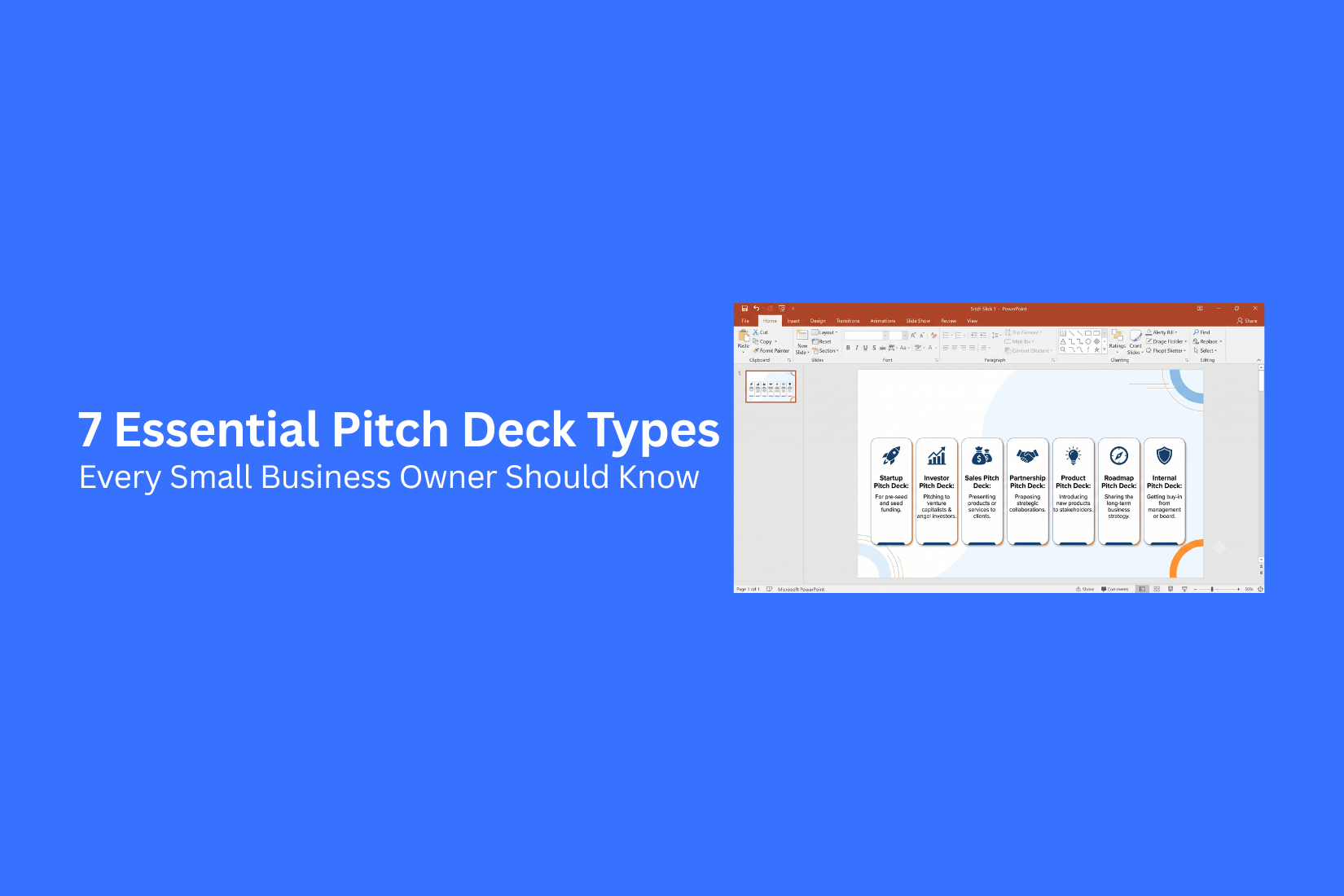
Many small business owners create pitch decks without knowing which format fits their goal. A deck made for investors may not work for sales, clients, or partners. Choosing the wrong type can make the message unclear and leave the audience without the details they need. However, using the right pitch deck type helps small businesses present their ideas for different needs. This guide covers seven pitch deck types and explains how each one can support goals such as funding, sales, partnerships, and client proposals. It also covers key slides, selection tips, best practices, common mistakes, and tools for creating effective presentations. Small business owners can use these insights to build clearer decks for their next presentation.
What Is a Pitch Deck?
A pitch deck is a short presentation that explains a business idea, product, or company goal. It helps business owners share their plans with investors, partners, customers, or team members. A good pitch deck covers key details about the business. It may include the problem the business solves, the target audience, the product or service, market details, business model, and future plans. The main goal of a pitch deck is to make an idea easy to understand. Each slide should support the main message and help the audience see the value of the business.
Why Small Businesses Need Multiple Pitch Decks
Small businesses often speak with different groups of people. Investors want to see growth plans and financial details. Customers want to know how a product can help them. Partners may need information about shared goals and opportunities. One pitch deck may not work for every situation. A startup pitch deck can focus on funding needs. A sales pitch deck can focus on customer problems and product benefits. A partnership pitch deck can highlight shared value. Using different pitch decks helps small business owners share the right information with the right audience. It also saves time because each presentation is built for a clear purpose.
Benefits of Using the Right Pitch Deck
The right pitch deck helps create a clear message. It shows the most useful information for a specific audience without adding extra details. A focused pitch deck can help people understand a business faster. It can also make meetings more productive because the presentation matches the goal of the discussion. Small business owners can use pitch decks to explain ideas, attract support, build trust, and move conversations forward. A well-planned deck gives every audience a better view of what the business offers and where it is heading.
7 Essential Pitch Deck Types Every Small Business Owner Should Know
A pitch deck helps you share ideas, goals, and plans with the right audience. Small business owners use different pitch decks for different needs. Each type has a specific purpose and message. Choosing the right format helps you present your business clearly.
Investor Pitch Deck
An investor pitch deck is used to present a business idea to potential investors. It explains the problem, solution, market, business model, and growth plans. This deck helps investors understand the value of the business and its future goals.
Sales Pitch Deck
A sales pitch deck helps businesses present their products or services to potential customers. It focuses on customer needs, product benefits, pricing, and reasons to choose the offer. A clear sales deck makes it easier for customers to understand what the business provides.
Product Pitch Deck
A product pitch deck focuses on a specific product or service. It explains how the product works, the problem it solves, and the value it offers. Businesses use this deck to introduce new products or gain support for product ideas.
Partnership Pitch Deck
A partnership pitch deck helps businesses connect with other companies or organizations. It explains shared goals, possible benefits, and ways both sides can work together. This deck helps start conversations with potential partners.
Company Overview Pitch Deck
A company overview pitch deck shares key details about a business. It covers the company story, services, team, achievements, and goals. Businesses use this deck to give people a clear view of who they are and what they do.
Startup Pitch Deck
A startup pitch deck is designed for new businesses seeking support, funding, or attention. It explains the startup idea, market need, business plan, and future direction. This deck helps others understand the startup’s purpose and plans.
Client Proposal Pitch Deck
A client proposal pitch deck is used to present a project idea or service offer to a potential client. It includes the client’s needs, proposed solution, timeline, and expected results. This type of deck helps businesses present their approach in a clear way.
Key Slides Every Pitch Deck Should Include
A strong pitch deck needs a clear structure. Each slide should help the audience understand the business, the problem it solves, and the value it offers. The right slides can make your message easier to follow and help people see the purpose behind your idea.
Cover Slide
The cover slide creates the first impression of your pitch deck. It should include your business name, logo, and a short statement about what you do. Keep the design clean and easy to read. A simple cover helps the audience know what the presentation is about before moving into the details.
Problem and Solution
This slide explains the issue your business solves. Start by showing the challenge your target customers face. Then explain how your product or service helps fix that problem. A clear problem and solution slide helps people understand why your business exists. It also shows that you know your customers and their needs.
Market Opportunity
The market opportunity slide shows the size of your target market. It explains who your customers are and how much demand exists for your product or service. Use simple data to show the number of potential customers, market size, or growth areas. This slide helps the audience see the business potential.
Business Model
The business model slide explains how your company makes money. Share details about your pricing, sales channels, and revenue sources. A clear business model helps people understand how your idea can become a working business. Keep the information simple and focus on the main ways your company earns revenue.
Competitive Advantage
This slide shows what makes your business different from others. Explain your strengths, unique features, or methods that give you an edge. Avoid listing too many points. Focus on the few things that make customers choose your business over other options.
Call to Action
The call to action slide tells the audience what you need from them. This could be funding, partnerships, customer support, or another type of help. End your pitch deck with a clear next step. A direct request helps the audience know how they can support your business.
How to Choose the Right Pitch Deck for Your Business Goals
A pitch deck works best when it matches your business goal. The same deck may not fit every situation. A deck for investors needs a different focus than one for customers or partners. Start by knowing what you need to achieve.
Define Your Audience
Your audience shapes the way you build your pitch deck. Investors want to see growth plans, market details, and business numbers. Customers want to know how your product or service solves a problem. Learn what your audience cares about most. Use that information to choose the right slides, examples, and details. A clear message helps people follow your idea.
Match the Deck to Your Objective
Each pitch deck should have a clear purpose. A fundraising deck may focus on your business model, revenue plans, and future goals. A sales deck may focus on product benefits and customer needs. Start with your main goal. Then select the pitch deck type that supports it. This keeps your message focused and helps you avoid adding extra details.
Customize Your Content
A strong pitch deck feels made for its purpose. Adjust your slides, images, data, and stories based on your goal. Remove details that do not support your main message. Small changes can make your deck more useful. A simple update to your content can help your audience understand your idea faster.
Best Practices for Creating an Effective Pitch Deck
A good pitch deck helps people understand your business idea, goals, and plans. Each slide should support your main message. A clear structure and strong design can help your audience follow your story.
Keep Your Message Clear
A pitch deck should have one clear purpose. Each slide should share a simple idea. Avoid adding too much text or too many details. Use short points that explain your message quickly.
Use Strong Visuals
Images, charts, and graphics can make your slides easier to understand. Good visuals help explain ideas without adding extra words. Choose visuals that match your message and support your points.
Support Your Claims With Data
Facts and numbers can make your pitch stronger. Use data to show market details, customer needs, growth plans, or business results. Make sure your sources are clear, and your numbers are easy to read.
Maintain Consistent Branding
A consistent style makes your pitch deck look organized. Use the same colors, fonts, and design elements across slides. This helps your audience recognize your business and follow the presentation.
Practice Your Presentation
A well-designed deck works best with good delivery. Practice your speech before presenting. Know your key points and prepare answers for common questions. A confident presentation helps people understand your business better.
Common Pitch Deck Mistakes to Avoid
A pitch deck can lose its impact because of small mistakes. A strong deck needs a clear message, the right structure, and a design that supports the goal. These common issues can make it harder for people to understand your idea.
Using the Same Deck for Every Audience
Each audience has different needs and questions. A deck for investors should focus on growth, numbers, and business plans. A deck for customers should focus on value and solutions. Using one version for everyone can make your message feel unclear. Adjust your slides based on who will view the deck.
Overloading Slides With Information
Too much text can make slides hard to follow. People may miss the main point if every slide contains long paragraphs, many charts, or too many details. Keep each slide focused on one main idea. Use short text, simple visuals, and only the details that support your message.
Ignoring Storytelling
A pitch deck needs more than facts and figures. A good structure helps people follow your business idea from the problem to the solution. Start with the challenge your business solves. Show how your product or service helps. End with the results or future plans.
Weak Design and Formatting
Poor design can distract people from your message. Small text, messy layouts, and inconsistent styles can make your deck look unprepared. Use the same fonts, colors, and layouts across your slides. Keep spacing clean. Make sure each slide is easy to read.
Ending Without a Clear Next Step
A pitch should guide people toward an action. A weak ending can leave viewers unsure about what to do next. Add a clear closing slide. State your request, goal, or the next action you want people to take. A strong ending helps your audience know how to respond.
Final Notes:
A pitch deck should match the goal of the presentation. Small businesses often need different pitch decks for investors, customers, partners, and clients because each audience looks for different information. The seven main pitch deck types include investor, sales, product, partnership, company overview, startup, and client proposal decks. Each type helps businesses share their ideas in a clear way.
A strong pitch deck explains the business idea, the problem it solves, the solution, the value it offers, and the next step. Important slides often include a cover slide, problem and solution, market opportunity, business model, competitive advantage, and call to action. These slides help the audience understand the purpose of the presentation. Choosing the right pitch deck starts with knowing the audience and the main goal. A fundraising deck should focus on business plans and growth details. A sales deck should focus on customer needs and product value. A partnership deck should explain shared goals and possible benefits. Customizing the content helps make the message clearer and more useful.
A good pitch deck uses simple messages, helpful visuals, clear data, and consistent branding. Each slide should support the main idea without adding extra details. Practice also helps presenters explain their points clearly and answer questions. Common pitch deck mistakes include using the same deck for every audience, adding too much information, missing a clear story, using poor design, and ending without a clear next step. Small businesses can create better presentations by choosing the right pitch deck type and focusing on what their audience needs to understand.
FAQs
What is a pitch deck?
A pitch deck is a short presentation that explains a business idea, product, or company goal. It helps business owners share important details with investors, customers, partners, or team members.
Why do small businesses need different pitch decks?
Different audiences need different information. Investors want to see growth plans and financial details. Customers want to know how a product helps them. Partners want to understand shared goals and opportunities.
What are the main types of pitch decks?
The main pitch deck types include investor pitch decks, sales pitch decks, product pitch decks, partnership pitch decks, company overview pitch decks, startup pitch decks, and client proposal pitch decks.
Which pitch deck should a small business use for investors?
An investor pitch deck works best for funding discussions. It usually covers the business problem, solution, market, business model, and growth plans.
What slides should every pitch deck include?
Most pitch decks include a cover slide, problem and solution slide, market opportunity slide, business model slide, competitive advantage slide, and call to action slide.
Can one pitch deck work for every audience?
A single pitch deck may not fit every situation. Each audience has different needs, so adjusting the slides and message can make the presentation clearer.
How can small businesses improve their pitch decks?
Small businesses can improve their decks by keeping messages clear, using helpful visuals, adding useful data, keeping a consistent design, and practicing the presentation.
What are common pitch deck mistakes?
Common mistakes include adding too much information, using the same deck for every audience, using weak design, missing a clear story, and ending without a clear next step.
How long should a pitch deck be?
The length depends on the purpose and audience. A good pitch deck should include enough information to explain the idea without adding unnecessary details.
What is the purpose of a call to action slide?
A call to action slide tells the audience what you need from them. It may ask for funding, partnerships, customer support, or another next step.



You may also be interested in ...

How To Create An Eye-Catching Portfolio
If you’re looking to create an eye-catching portfolio, this post will come in handy. In this article, you can find the easies...
23 Jun, 2024

How To Easily Create An Infographic
Infographics are the perfect way to make a presentation that will impact an audience, but their design and composition might...
08 Jun, 2024

PowerPoint Template Tips & Tricks You Ne...
PowerPoint seems to be an unknown world for many people, especially those who have been assigned to create a presentation out...
08 Jun, 2024