100+ Best 5-Minute Presentation Ideas: Topics, Tips & How to Pick One
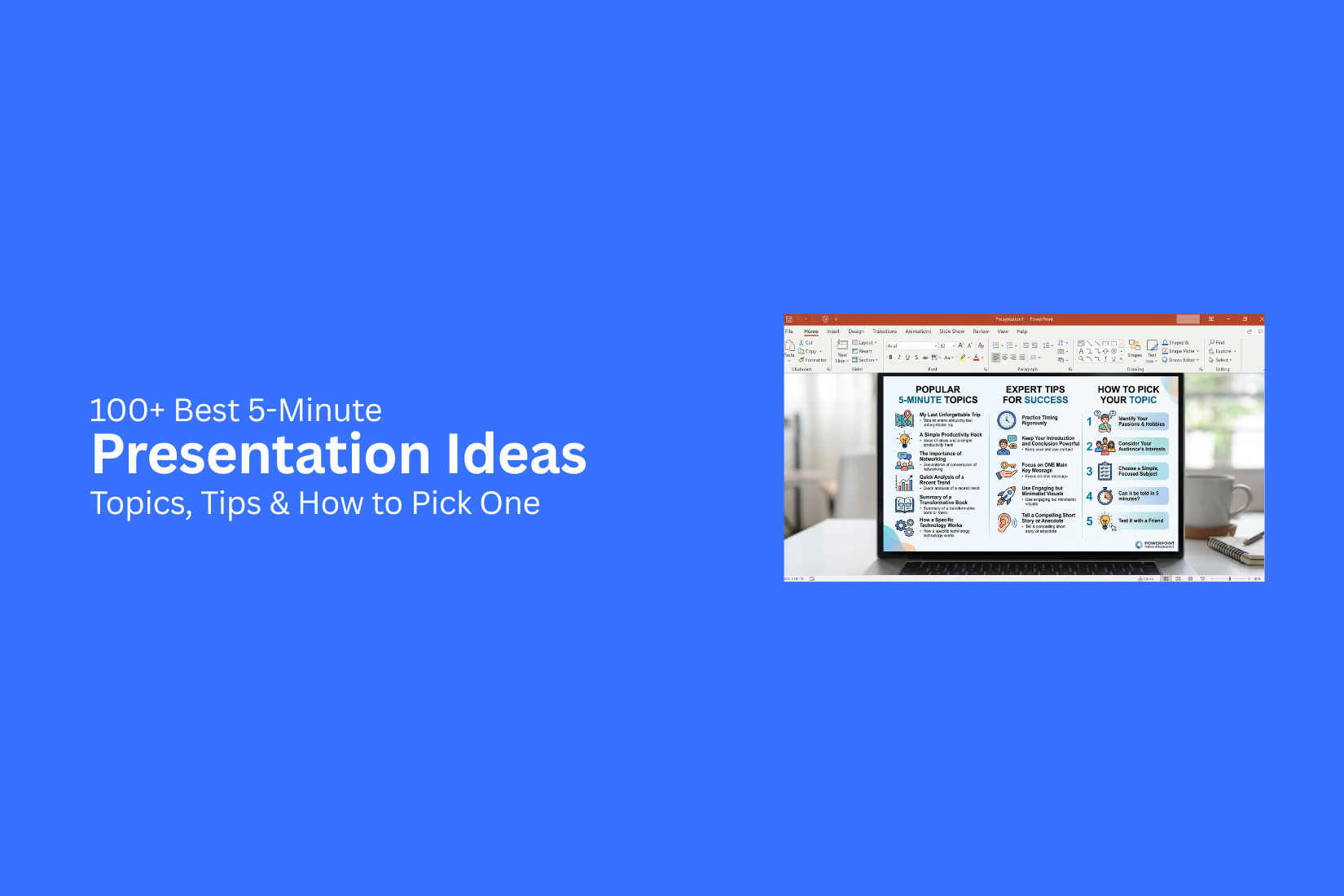
Finding the right topic for a 5-minute presentation can be difficult. A short presentation needs a clear idea, a simple structure, and useful points. Many speakers struggle to choose a subject that fits the time and keeps people interested. The challenge grows because unclear topics may also make the message hard to follow.
With the right guidance, this article shares 100+ 5-minute presentation ideas, topic tips, and ways to pick a suitable subject. It explains how to plan slides, organize key points, and deliver a clear presentation within a short time. Readers will find ideas across different categories, along with simple tips to improve delivery and avoid common mistakes during their next presentation.
What Is a 5-Minute Presentation?
A 5-minute presentation is a short talk that shares an idea, topic, or message within a limited time. The speaker has only a few minutes to explain key points, so every slide and sentence needs a clear purpose. These presentations are common in classrooms, meetings, interviews, and team sessions. They help speakers practice clear communication and share information without adding extra details.
A typical 5-minute presentation may include 5 to 7 slides. The first slide introduces the topic. The middle slides explain the main points. The final slide ends with a key message or takeaway. Short presentations need a simple structure. A strong topic, clean slides, and focused content help the audience follow the message easily. The goal is not to cover every detail. The goal is to share the most useful points in a short time.
Why Choose a 5-Minute Presentation?
A 5-minute presentation helps you share ideas in a clear and simple way. It gives you a short time to explain a topic without adding extra details that may distract your audience. Short presentations are useful for many situations. Students can use them for class projects. Professionals can use them for quick updates, team meetings, or short pitches. They also help speakers practice organizing thoughts and speaking with confidence.
A limited time frame pushes you to focus on the main message. You learn how to choose the most useful points and remove details that do not support your topic. This makes your presentation easier for people to follow. Five-minute presentations also keep the audience engaged. A short format helps prevent information overload and gives listeners a clear idea of the topic. Each slide has a clear purpose, and every minute helps move the message forward. This format works well for beginners and experienced speakers. It allows you to practice presentation skills, test new ideas, and deliver information in a simple format.
Why Choose a 5-Minute Presentation?
A 5-minute presentation helps you share ideas in a clear and simple way. It gives you a short time to explain a topic without adding extra details that may distract your audience. Short presentations are useful for many situations. Students can use them for class projects. Professionals can use them for quick updates, team meetings, or short pitches. They also help speakers practice organizing thoughts and speaking with confidence. A limited time frame pushes you to focus on the main message. You learn how to choose the most useful points and remove details that do not support your topic. This makes your presentation easier for people to follow.
Five-minute presentations also keep the audience engaged. A short format helps prevent information overload and gives listeners a clear idea of the topic. Each slide has a clear purpose, and every minute helps move the message forward. This format works well for beginners and experienced speakers. It allows you to practice presentation skills, test new ideas, and deliver information in a simple format.
How to Structure a 5-Minute Presentation
A 5-minute presentation needs a clear plan. Every slide and every sentence should have a purpose. A simple structure helps you share your ideas without rushing. Start with a strong opening, explain your main points, and finish with a clear closing message.
Start With a Strong Opening
The first few seconds shape how people view your presentation. Start with a question, a short story, a surprising fact, or a clear statement. This helps your audience understand the topic and stay focused.
Keep your opening short. Use it to introduce your main idea and explain why the topic matters. A strong start creates a smooth path for the rest of your talk.
Cover 2 to 3 Main Points
A 5-minute presentation does not need many ideas. Choose two or three key points that support your topic. Too many details can make your message harder to follow. Give each point enough time. Use simple examples, visuals, or short explanations to make your ideas clear. A focused presentation feels more organized and easier to remember.
End With a Memorable Closing
The last part of your presentation should leave a clear message. Repeat your main idea in a fresh way. Share a final thought, a useful tip, or a simple action your audience can take. A strong closing helps people remember your presentation after it ends. Keep it short and make sure it connects with the points you shared.
Stay Within the Time Limit
Practice your presentation before you deliver it. Check how long each section takes and remove details that do not support your main message. Use your slides as a guide, not as a script. A balanced pace gives you enough time to explain your ideas and answer questions if needed. Staying within five minutes shows good preparation and keeps your audience engaged.
100+ Best 5-Minute Presentation Ideas
A 5-minute presentation needs a clear topic that fits a short time frame. The best topics are simple, focused, and easy to explain. A strong idea helps you share useful information without adding too many details. These presentation ideas cover different subjects, from school topics to professional themes. Pick a topic that matches your audience and gives you enough points to discuss within five minutes.
Education Presentation Ideas
- How online learning affects students
- Benefits of reading every day
- How to build better study habits
- The role of teachers in student success
- Why teamwork matters in classrooms
- How to improve memory skills
- The importance of time management for students
- Ways to stay focused while studying
- How homework supports learning
- The future of classroom learning
Science Presentation Ideas
- How the human brain works
- The science behind sleep
- How plants make food
- Why earthquakes happen
- How climate affects living things
- The water cycle explained
- How vaccines protect people
- The science of emotions
- How animals adapt to their environment
- The basics of space exploration
Technology Presentation Ideas
- How smartphones changed daily life
- The history of computers
- How cloud storage works
- The future of wearable technology
- How apps are created
- Benefits of smart devices
- How websites work
- The role of technology in education
- How cybersecurity protects information
- The impact of digital tools on work
Business Presentation Ideas
- How small businesses grow
- Basics of business planning
- How companies build a brand
- The role of customer service
- How businesses use data
- Ways to improve workplace teamwork
- How startups get started
- Common business mistakes
- How companies manage money
- The importance of business ethics
Marketing Presentation Ideas
- How social media marketing works
- Basics of content marketing
- How brands attract customers
- The role of storytelling in marketing
- How email marketing helps businesses
- Ways to create better ads
- How customer reviews affect buying choices
- The basics of market research
- How influencers promote products
- Why visual content matters in marketing
Health and Wellness Presentation Ideas
- Benefits of regular exercise
- How healthy food supports the body
- The importance of drinking enough water
- Ways to reduce daily stress
- How sleep affects health
- Benefits of outdoor activities
- How habits affect personal health
- The basics of mental wellness
- How to create a healthy routine
- The importance of self-care
Environmental Presentation Ideas
- Causes of air pollution
- Ways to reduce plastic waste
- How recycling helps the planet
- The importance of clean water
- How renewable energy works
- Effects of climate change
- Ways to protect wildlife
- The role of forests in nature
- How people can save energy
- Sustainable living ideas
History Presentation Ideas
- Important events that changed history
- The story of ancient civilizations
- Famous leaders and their impact
- The history of inventions
- How wars changed countries
- The history of education
- The development of transportation
- Famous historical discoveries
- The history of communication tools
- Lessons from past events
Psychology Presentation Ideas
- How habits are formed
- Why people make decisions
- How emotions affect actions
- The power of positive thinking
- How memory works
- Why people need social connections
- How stress affects the brain
- The psychology of motivation
- How personality develops
- The basics of human behavior
Finance Presentation Ideas
- How to create a personal budget
- Basics of saving money
- How credit cards work
- The importance of financial planning
- Common money mistakes
- How investments work
- Tips for managing expenses
- Understanding income and expenses
- How businesses handle finances
- The basics of financial goals
Career and Professional Development Presentation Ideas
- How to build a strong resume
- Tips for job interviews
- How to improve workplace skills
- The value of networking
- Ways to set career goals
- How to develop leadership skills
- Building confidence at work
- How to manage professional growth
Leadership Presentation Ideas
- Qualities of a good leader
- How leaders inspire teams
- The role of trust in leadership
- Ways to solve team problems
- How leaders make decisions
- The difference between managers and leaders
Communication Presentation Ideas
- How to improve speaking skills
- The importance of body language
- Ways to become a better listener
- How to handle difficult conversations
- Tips for clear communication
- Common communication mistakes
Social Media Presentation Ideas
- How social media affects people
- Benefits of social media platforms
- Social media safety tips
- How creators build audiences
- The impact of viral content
- How businesses use social media
Artificial Intelligence Presentation Ideas
- How artificial intelligence works
- Uses of AI in daily life
- AI in education
- AI tools for productivity
- How AI changes different industries
- Benefits and challenges of AI
Personal Development Presentation Ideas
- How to build confidence
- Ways to improve discipline
- Setting and reaching goals
- How to develop good habits
- The value of lifelong learning
- How to stay motivated
Fun and Creative Presentation Ideas
- Interesting facts about animals
- The history of popular games
- How movies are made
- The story behind famous inventions
- Unique traditions around the world
- Strange facts from nature
- How music affects emotions
- The science behind magic tricks
Debate and Opinion Presentation Ideas
- Should students use phones in class?
- Is online learning better than traditional learning?
- Should schools teach financial skills?
- Are video games helpful or harmful?
- Should social media have age limits?
- Is technology making life easier?
Current Events Presentation Ideas
- Recent technology changes
- New trends in education
- Changes in business practices
- Major environmental issues
- New scientific findings
- Important global events
Miscellaneous Presentation Ideas
- How hobbies improve life
- The history of photography
- How travel changes people
- Benefits of learning a new language
- The story of famous companies
- How sports bring people together
- The basics of cooking skills
- How fashion trends change
- The importance of creativity
- Interesting facts about the human body
These topics can help you create a short presentation with a clear message. Choose a subject that matches your audience, add a few strong points, and keep each slide focused on one idea.
Tips for Delivering a Great 5-Minute Presentation
A short presentation needs a clear plan. Every slide and every word should support your main message. Good preparation helps you stay focused and deliver your ideas with confidence.
Practice Your Timing
A 5-minute presentation gives you limited time to share your message. Practice your speech several times before presenting. Use a timer to check your speed. Remove extra details if you go over the time limit. Leave enough time for a smooth opening, main points, and closing message.
Keep Slides Simple
Your slides should support your speech, not replace it. Use short text, clear headings, and clean layouts.
Avoid adding too much information to one slide. A simple design helps your audience follow your message without feeling overwhelmed.
Focus on One Main Idea
A short presentation works best with one clear topic. Choose the main point you want your audience to remember. Each slide should connect to that idea. Remove details that do not help explain your message.
Use Visuals Effectively
Images, charts, and icons can help explain your ideas faster. Pick visuals that match your topic and add value to your slides. Avoid using random images just to fill space. Every visual should have a purpose.
Speak Clearly and Confidently
Use a steady voice and speak at a comfortable speed. Pause between key points to help your audience follow along. Practice your delivery style before the presentation. Good preparation can help you feel more relaxed while speaking.
Engage Your Audience
A strong presentation creates a connection with the audience. Ask a simple question, share a short example, or use a quick activity to keep people involved. Look at your audience while speaking. A natural conversation style can make your presentation more enjoyable.
Prepare for Questions
Plan for possible questions before your presentation. Think about what your audience may want to know after hearing your ideas. Prepare short and clear answers. If you need more time to respond, explain that you will follow up with more details later.
Common Mistakes to Avoid
A 5-minute presentation needs a clear message and careful planning. Small mistakes can make your ideas harder to follow. Avoid these common problems to create a smoother presentation experience.
Choosing a Topic That Is Too Broad
A broad topic can make your presentation feel unclear. A 5-minute talk does not give you enough time to cover a large subject in detail.
Pick a focused topic with one main idea. For example, instead of talking about “Social Media,” choose “How Social Media Helps Small Businesses Grow.” A specific topic helps you stay organized and share useful points.
Reading Directly From Slides
Slides are there to support your speech, not replace it. Reading every word from the screen can make your presentation feel less personal. Use short notes or key points on each slide. Explain the details with your own words. This helps the audience stay connected with your message.
Using Too Much Text
Too much text can make slides hard to read. A 5-minute presentation needs simple visuals and short points. Use headlines, bullet points, images, and charts to share your ideas. Keep each slide focused on one message. A clean layout helps the audience follow along easily.
Ignoring Time Limits
A short presentation needs good time control. Adding too many points can make you rush through important information. Plan your slides based on the time you have. Leave enough time for your opening, main points, and closing message. Practice with a timer to keep your presentation within five minutes.
Skipping Practice
Practice helps you find problems before presenting. Without practice, you may speak too quickly, forget key points, or run out of time. Review your slides several times. Practice your delivery out loud. This helps you feel more prepared and present your ideas with confidence.
Final Notes
A great 5-minute presentation starts with the right topic and a clear plan. A focused idea helps you share your message without adding unnecessary details. The right structure also makes your slides easier to follow. The presentation ideas in this guide can help you find a topic that matches your goals, audience, and interests. Pick a subject that gives you enough points to explain within five minutes. Keep your slides simple, use helpful visuals, and practice your delivery before presenting.
Short presentations are a great way to improve communication skills. They teach you how to organize ideas, share information clearly, and speak with confidence. With good preparation, you can create a presentation that keeps your audience focused and leaves a clear message.
FAQs
How many slides should a 5-minute presentation have?
A 5-minute presentation usually works well with 5 to 7 slides. Each slide should focus on one main point. A simple slide structure helps you explain your topic clearly without rushing.
What makes a good 5-minute presentation topic?
A good topic is clear, focused, and easy to explain in a short time. Choose a subject that matches your audience and gives you enough useful points to discuss.
How do I choose a 5-minute presentation idea?
Start by thinking about your audience, purpose, and interests. Pick a topic that you understand well. Make sure the idea can be explained with a few key points.
How long should I spend practicing a 5-minute presentation?
Practice your presentation several times before the actual event. Use a timer to check your speaking speed. Practice helps you manage your time and improve your delivery.
Can I use images in a 5-minute presentation?
Yes. Images, charts, and icons can help explain ideas quickly. Use visuals that support your message and avoid adding images that do not provide value.
What should I include in a 5-minute presentation?
A short presentation should have an introduction, two or three main points, and a closing message. Each part should support your main topic.
How can I make my 5-minute presentation more interesting?
Use a strong opening, clear examples, and simple visuals. You can also ask a question or share a short story to keep your audience involved.
What mistakes should I avoid in a 5-minute presentation?
Avoid choosing a broad topic, adding too much text, reading from slides, and skipping practice. These mistakes can make your message harder to understand.
Is a 5-minute presentation good for beginners?
Yes. A short presentation helps beginners practice organizing ideas, creating slides, and improving speaking skills. It is a useful format for building presentation experience.
How can I end a 5-minute presentation?
End with your main message or a key takeaway. A clear closing helps your audience remember the most useful point from your presentation.


You may also be interested in ...

How To Create An Eye-Catching Portfolio
If you’re looking to create an eye-catching portfolio, this post will come in handy. In this article, you can find the easies...
23 Jun, 2024

How To Easily Create An Infographic
Infographics are the perfect way to make a presentation that will impact an audience, but their design and composition might...
08 Jun, 2024

PowerPoint Template Tips & Tricks You Ne...
PowerPoint seems to be an unknown world for many people, especially those who have been assigned to create a presentation out...
08 Jun, 2024