Need a Topic? Here Are 125+ Impromptu Presentation Ideas
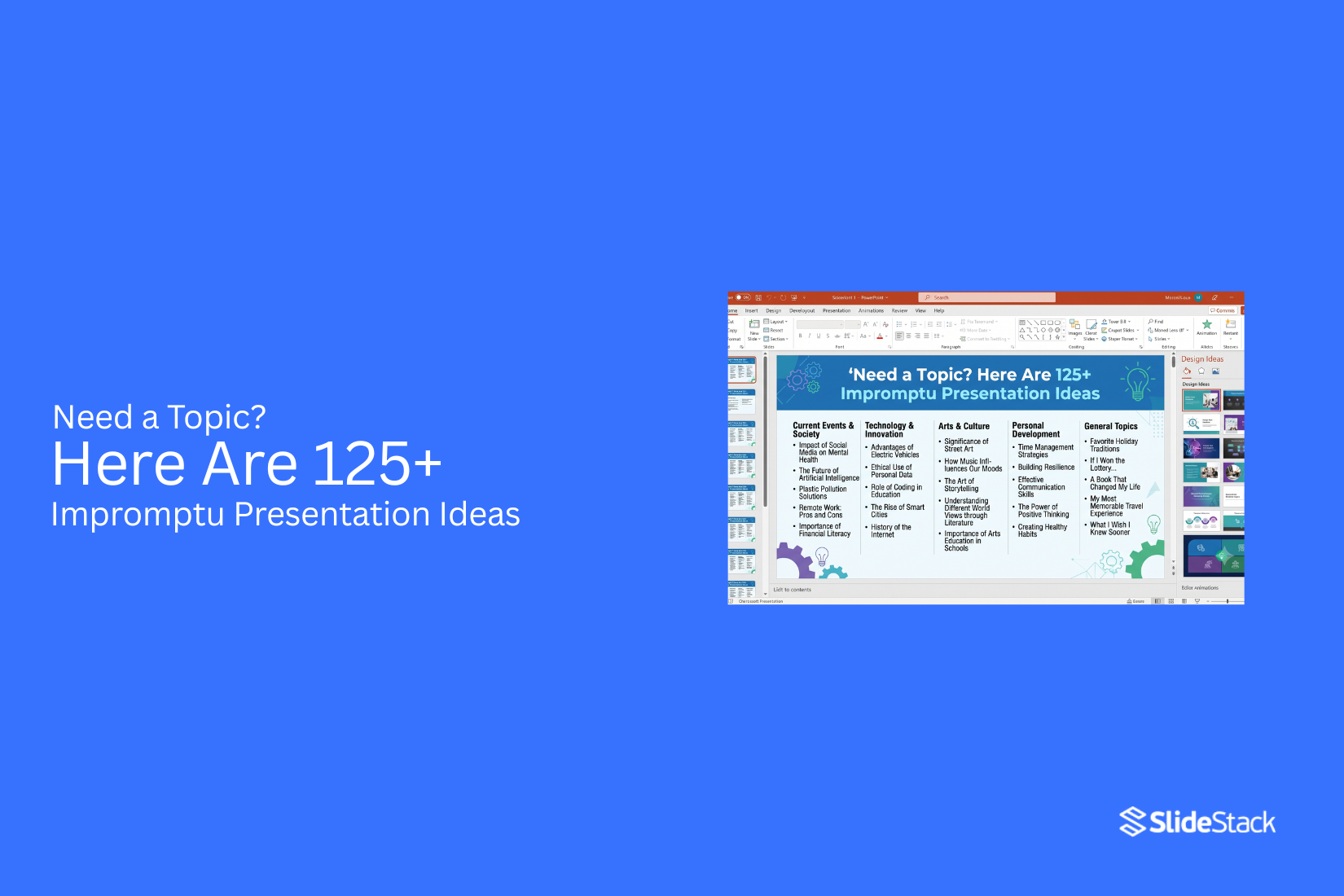
You get a topic and only seconds to respond. The room stays quiet. All eyes stay on you. Your thoughts need to form into a clear message right away. That moment defines impromptu presentations. Impromptu presentations are short, unplanned talks where structure matters more than detail, and clear thinking matters more than perfect wording. This guide gives you ready-to-use impromptu presentation ideas, simple speaking frameworks, time-based topic lists, and practice methods to help you speak with clarity under pressure.
What Is an Impromptu Presentation?
An impromptu presentation is a short speech given without preparation. The speaker does not plan or rehearse in advance. The topic appears at the moment of speaking, and the response happens right away. This type of speaking is common in schools, job interviews, team meetings, and speaking contests. A teacher may ask a student to speak on a topic with no notice. A manager may ask an employee to share a quick idea during a meeting. Speaking events also use this format to test speaking ability under pressure.
The main purpose is to measure how clearly a person can organize thoughts in a short time. It shows how quickly someone can form ideas and speak in a structured way. It also reflects how well a person communicates without notes or practice. Preparation time is usually zero. The speaker receives the topic and starts speaking right away. Speaking time is often between one and three minutes. Some settings allow up to five minutes depending on the rules. Topics vary based on the setting. Schools may use simple ideas like daily life or personal views. Workplaces may focus on problem-solving or opinions about tasks. Speaking competitions may assign random topics selected on the spot.
Benefits of Practicing Impromptu Presentations
Impromptu speaking trains the mind to respond quickly. It builds clear thinking under pressure. You learn to organize ideas in seconds instead of minutes. Speaking without preparation also strengthens confidence. The more you do it, the less fear shows up in front of others. Your voice feels steadier. Your ideas come out more clearly. There is also a big improvement in communication skills. You start to choose simpler words. Sentences become easier to follow. Listeners understand your message without confusion.
Another benefit shows up in everyday life. School discussions, meetings, and casual talks feel easier to handle. You do not freeze as often. You stay active in conversations. This practice also sharpens listening skills. You pick up key points faster. That helps you respond in a more focused way. Over time, thinking and speaking begin to work together smoothly. Ideas form faster, and words follow with less effort.
How to Deliver an Effective Impromptu Presentation
An impromptu presentation happens without preparation time. The speaker must share ideas clearly in a short moment. Simple structure helps the message stay strong. Calm thinking supports better speaking. Clear words matter more than complex ideas. Each part of the talk has a role. A start builds direction. Main points carry the message. A closing leaves a final idea in the listener’s mind. Small habits during speaking also help control pressure and improve clarity.
Take Time to Organize Your Thoughts
A short pause helps the mind settle. Ideas start to form in a clearer way. One main message should stand out before speaking begins. Simple points work better than many ideas. A quick mental outline keeps the speech steady. Extra ideas can distract from the main message and reduce focus.
Use a Simple Speaking Framework
A clear structure makes speaking easier. One basic flow is start, main points, and close. This keeps ideas in order from the first sentence to the last. Each part of the structure has a purpose. The start sets direction. Main points carry information. The closing brings everything together in a short finish.
Create a Strong Opening
The first line shapes attention. A direct sentence works well. A short question can also set direction. Long introductions reduce impact. Simple words help the message land faster. A clear opening also helps the speaker gain confidence early in the talk.
Support Your Main Points with Examples
Main points become clearer with real situations. A simple case or short story helps the audience follow the idea. One example per point keeps focus strong. Too many details can blur meaning. Clear and short examples make ideas easier to understand and remember.
End with a Memorable Conclusion
The final lines should restate the main message in simple form. No new ideas belong at this stage. A short closing sentence helps the talk feel complete. Strong endings stay in the listener’s mind longer than long explanations.
Manage Nervousness While Speaking
A steady pace helps control pressure. Short pauses between ideas give the mind space to stay clear. Focus stays on one sentence at a time. Attention on small steps keeps the message smooth. A calm voice improves clarity even during pressure moments.
125+ Impromptu Presentation Ideas
Running out of ideas in the middle of a presentation can feel stressful. A good topic helps you speak with clarity and stay on track. The list below gives many ideas across different areas so you can pick one that fits your situation.
Fun and Lighthearted Topics
These topics bring simple and easy speaking ideas. They help you warm up and speak with comfort. The focus stays on everyday joy and small stories.
• A hobby you enjoy and why it matters
• A funny moment from your life
• A favorite childhood memory
• A pet and what makes it special
• A food you enjoy most
• A song that changes your mood
• A weekend activity you like
• A simple habit that makes you happy
• A place you like to visit
• A game you enjoyed growing up
Education and Learning Topics
These ideas focus on school, learning habits, and knowledge. They help explain how people grow through study and practice. Each topic connects to real learning situations.
• Value of daily reading
• Why curiosity helps learning
• A subject that should be added in school
• Lessons learned from mistakes
• Role of practice in skill building
• Importance of asking questions
• Learning outside school
• Study habits that work
• Good teaching methods
• Future of education
Technology and Artificial Intelligence Topics
These topics focus on tools, machines, and digital systems. They show how technology shapes daily routines and work. Each idea connects to real-life use of tech.
• How mobile phones affect life
• Smart assistants in daily use
• Benefits and risks of AI tools
• Social media effects on thinking
• Online learning tools
• Data safety and privacy
• Gaming technology
• Automation in jobs
• Tech in healthcare
• Internet and global connection
Business and Entrepreneurship Topics
These topics focus on ideas, work, and small business growth. They show how people start and manage work. Each idea links to simple business thinking.
• What makes a business idea strong
• Customer trust in business
• Challenges in small business
• Role of branding
• Creative thinking in business
• Planning in startups
• Lessons from failed ideas
• Starting a small business
• Online market growth
• Teamwork in business
Career and Workplace Topics
These ideas focus on jobs and work life. They show skills needed for daily work. Each topic connects to real workplace situations.
• Good employee qualities
• Handling work pressure
• Communication skills at work
• Job interview first impression
• Time management at work
• Receiving feedback
• Teamwork in the office
• Skills employers want
• Remote work challenges
• Career growth steps
Leadership and Management Topics
These topics focus on guiding people and teams. They explain how leaders make choices and support others. Each idea connects to real leadership actions.
• Qualities of a good leader
• Leading by example
• Making decisions under pressure
• Building trust in teams
• Handling conflict
• Motivating people
• Responsibility in leadership
• Listening skills
• Setting team goals
• Supporting team members
Personal Development Topics
These ideas focus on self-growth and daily habits. They show how small actions shape progress. Each topic connects to personal improvement.
• Building self-confidence
• Daily habits and life results
• Self-discipline importance
• Learning from failure
• Staying focused on goals
• Managing emotions
• Building resilience
• Useful daily routines
• Patience in life
• Setting personal goals
Health and Wellness Topics
These topics focus on body and mind care. They show simple ways to stay healthy. Each idea connects to daily health choices.
• Exercise and health benefits
• Healthy eating habits
• Sleep and energy
• Mental health awareness
• Stress handling methods
• Drinking enough water
• Walking as exercise
• Screen time effects
• Morning routines
• Value of rest
Social Media and Digital Life Topics
These ideas focus on online life and digital habits. They show how people use platforms daily. Each topic connects to real online behavior.
• Social media and attention
• Online and real friendships
• Time loss from scrolling
• Online safety basics
• Pressure from likes
• Content creation trends
• Influence of creators
• Screen time balance
• Privacy online
• Digital identity
Environment and Sustainability Topics
These topics focus on nature and daily habits. They show how actions affect the planet. Each idea connects to simple environmental care.
• Recycling importance
• Saving water habits
• Pollution effects
• Climate change impact
• Tree planting value
• Reducing plastic use
• Saving energy at home
• Wildlife protection
• Clean air importance
• Sustainable living
Current Events and Society Topics
These ideas focus on people, groups, and society life. They show how communities function. Each topic connects to real social issues.
• Community support
• Youth role in society
• Education access
• Public safety awareness
• Social change actions
• Media influence
• Equality in society
• Volunteer work
• Cultural understanding
• Global connection
Science and Innovation Topics
These topics focus on science facts and new ideas. They explain how things work in nature and technology. Each idea connects to basic science concepts.
• Space exploration
• How vaccines work
• Renewable energy
• Human brain basics
• Future transport systems
• Genetics basics
• Weather prediction
• Robotics use
• Water cleaning methods
• Science discovery process
Creative and Imaginative Topics
These ideas focus on open thinking and new ideas. They help build storytelling skills. Each topic connects to creative thinking.
• Life without internet
• Life on another planet
• Animals talking to humans
• Future city life
• New invention idea
• Alternate history idea
• World without money
• Superpower daily life
• New sport idea
• New school system
Debate-Style Topics
These topics focus on two sides of a subject. They help build argument skills. Each idea connects to real discussions.
• Online vs classroom learning
• Books vs digital reading
• City life vs village life
• Team sports vs solo sports
• Old jobs vs modern jobs
• Public vs private transport
• Homework removal discussion
• Exams vs continuous tests
• Free speech limits
• Tech dependence
Persuasive Presentation Topics
These topics focus on convincing others. They support clear reasons and simple points. Each idea connects to daily life choices.
• Daily reading habit
• Regular exercise habit
• Importance of school breaks
• Value of teamwork
• Time management need
• Learning new skills
• Sleep importance
• Saving money habit
• Volunteering value
• Communication skills
Informative Presentation Topics
These topics focus on clear facts. They explain how systems and processes work. Each idea connects to basic knowledge.
• Photosynthesis process
• Electricity basics
• Rain formation
• Internet working system
• Earth layers
• Digestive system
• Solar system
• Basic economics
• Water cycle
• Earthquake formation
One-Minute Presentation Topics
These topics are short and easy to speak. They help build quick speaking skills. Each idea fits a very short talk.
• Favorite food
• Hobby you like
• Recent lesson learned
• Dream travel place
• Favorite book
• Skill to learn
• Daily habit
• Inspiring person
• Good memory
• Personal goal
Five-Minute Presentation Topics
These topics allow more detail and structure. They help explain ideas step by step. Each topic fits a longer talk.
• Building good habits
• Communication importance
• Time management skills
• Teamwork value
• Technology impact
• Staying motivated
• Learning from mistakes
• Exam preparation
• Creativity role
• Speaking confidence
High School Presentation Topics
These ideas fit school-level speaking tasks. They focus on student life and growth. Each topic connects to school experiences.
• Study skills
• Peer pressure awareness
• Career planning
• Social media effects
• Physical activity importance
• Stress in school
• Subject choices
• Group projects
• Future study paths
• Leadership skills
College Presentation Topics
These topics focus on higher study life. They cover skills and challenges in college. Each idea connects to student growth.
• Internship value
• Time management
• Career readiness
• Study methods
• Networking basics
• Academic pressure
• Group work issues
• Money planning
• Skill building
• Study-life balance
Workplace and Team-Building Topics
These topics focus on work teams and daily office life. They help improve cooperation and results. Each idea connects to real workplace actions.
• Trust at work
• Team communication
• Meeting deadlines
• Work motivation
• Problem solving
• Workload handling
• Feedback sharing
• Conflict handling
• Productivity habits
• Team cooperation
How to Choose the Right Impromptu Presentation Topic
Picking a topic in a short time can feel hard. A clear choice makes the speech easier to deliver. The right topic helps ideas flow without stress. It also keeps the listener interested from start to end.
Consider Your Audience
Different people respond to different ideas. A group of students may prefer simple daily examples. A work group may connect with real tasks and results. The topic should match what the listeners already know. This helps the message land better.
Match the Topic to the Speaking Time
Time shapes the size of the topic. A short talk needs a small, direct idea. A long topic creates rushing and missing points. A narrow topic helps keep sentences clear and steady. The speech stays easier to follow.
Choose a Topic You Understand
Known ideas make speaking smoother. Words come faster with less effort. There is less risk of getting stuck. Clear thinking supports clear speaking. Unknown topics often break the flow of speech.
Balance Creativity and Simplicity
A fresh idea can still stay simple. Simple structure keeps the message easy to follow. Creative angles help the speech stand out. Too many complex points slow down understanding. A steady mix works best.
Focus on One Clear Message
One main idea keeps the speech strong. Each sentence should support that idea. Extra points can pull attention away. A single message is easier to remember. The listener stays aligned with the talk from start to finish.
Simple Frameworks for Organizing an Impromptu Presentation
An impromptu talk feels sudden. There is little time to plan. A clear structure helps you stay focused. It also helps your listener follow your ideas without confusion. These simple frameworks give your speech shape in seconds.
PREP Framework (Point, Reason, Example, Point)
Start with one clear point. Say it early. Then explain why it matters. Add a simple example to support it. End by repeating the main point in a clear way. This format works well for short answers. It keeps your message tight. It also stops you from drifting into unrelated ideas. A quick example could be a workplace idea, a class opinion, or a daily habit. One idea. One reason. One example. One closing line that repeats the main thought.
Past, Present, Future Framework
This structure moves through time in a simple flow. Begin with what happened before. Then talk about what is happening now. Finish with what could happen next. It works well for topics that involve change. You can use it for trends, habits, or personal growth. The flow feels natural because people already understand time. It helps your audience follow your thought process without effort.
Problem, Solution, Benefit Framework
Start by naming a problem. Keep it simple and clear. Then share a solution. After that, explain the benefit. This format is common in real-life discussions. It works well for ideas that try to fix something or improve something. The benefit part matters most. It shows why the solution matters in daily life or real situations.
What, Why, How Framework
Begin with what the topic is. Then explain why it matters. End with how it works or how it can be done. This structure helps when the topic feels new or unclear. It breaks information into three easy steps. Each part builds on the one before it. The listener moves from basic understanding to deeper meaning without confusion.
Story-Based Presentation Structure
A short story can guide your whole talk. Start with a simple situation. Move through what happens next. End with what you learned from it. Stories help people connect with ideas. They also make your message easier to remember. Keep the story short. Focus on one moment or one experience. Then link it back to your main point at the end.
Common Mistakes to Avoid
Many impromptu talks fail because of simple mistakes. These mistakes make ideas unclear and hard to follow. A few small changes can improve how the message lands. Focus, pace, and structure matter more than big words or complex ideas.
Speaking Without a Clear Structure
Some speakers start without a clear path. The talk feels scattered. Ideas jump from one point to another. The listener struggles to follow. A basic structure keeps everything in order. It helps the message stay clear from start to finish.
Covering Too Many Ideas
Some try to include every thought. The message loses strength. One main idea works better than many small ones. Too many points create confusion. A single focus keeps the talk sharp and easy to remember.
Speaking Too Quickly
Fast speech makes understanding harder. Words blur together. Important points get missed. A steady pace helps each idea land. Small pauses also give the listener time to process.
Ignoring Audience Engagement
Some speakers forget the listener. They speak without connection. Interest drops quickly. Simple eye contact builds attention. A short question can pull the listener back in. Small moments of connection keep the talk alive.
Ending Without a Clear Takeaway
Some talks end without direction. The message fades fast. A clear final point helps memory. One strong idea at the end works well. It gives the listener something to hold on to.
Tips to Improve Your Impromptu Speaking Skills
Strong impromptu speaking does not come from memorizing scripts. It comes from steady practice and quick thinking. Small daily habits can shape how clearly you speak under pressure. Each method below builds a specific skill that helps you stay clear, calm, and focused during any unexpected speaking moment.
Practice with Random Topics
Pick a topic without preparation and start speaking right away. Keep it short at first. One minute is enough. Focus on one clear idea instead of many points. This builds quick thinking and smoother delivery.
Record and Evaluate Your Presentations
Record your speaking practice using your phone. Watch it after. Notice where you pause too long or lose direction. Check your voice clarity and body movement. Small changes over time improve overall performance.
Expand Your Knowledge Across Different Subjects
Read short content from different areas like education, sports, business, and daily life. More exposure gives you more ideas to use during speaking. This makes it easier to respond to almost any topic.
Join Public Speaking Clubs
Join groups where speaking practice happens often. You get feedback from others and learn different styles. Speaking in front of people also reduces nervousness over time.
Practice Time-Limited Speaking Sessions
Set a timer and speak without stopping until it ends. Start with 30 seconds and slowly increase the time. This helps you think while speaking and keeps your message steady under pressure.
Tools and Resources for Practicing Impromptu Speaking
Practicing impromptu speaking gets easier with the right tools. These resources help you train your mind to respond quickly. They also help you stay clear and structured under pressure.
Online Topic Generators
Online topic generators give you random prompts. You can use them to practice speaking without preparation. Pick a topic and speak right away. No planning. No notes. This builds quick thinking and steady delivery.
Flashcards and Prompt Cards
Flashcards work well for daily practice. Write short topics on each card. Shuffle them before a session. Pick one card and start speaking. This keeps practice simple and flexible. It also helps you stay focused on one idea at a time.
Presentation Software
Presentation tools can support your practice sessions. Create slides with only one word or phrase per slide. Move through them without stopping. This helps you build flow and control while speaking. It also trains you to stay on topic.
AI Speaking Practice Tools
AI tools can act as a practice partner. They can give you topics and respond to your speech. You can repeat sessions as many times as needed. This helps you improve speed and structure in your answers. It also builds confidence over time.
Public Speaking Communities
Public speaking groups give you real practice with others. You speak in front of people and get feedback. This helps you learn how to handle pressure. It also helps you notice areas that need improvement. Regular practice in groups builds strong speaking habits.
Final Notes
Impromptu presentations do not reward perfect wording. They reward clear thinking. They reward focus. Calm delivery matters more than fancy language. A simple structure helps the speaker stay on track. One idea can carry the whole message. Everything else should support that idea.
A short method keeps things manageable. Pick a topic that fits the situation. Choose a simple structure like point, reason, example, then point again. Speak in short sentences. A quick rehearsal in your mind helps set direction. Slides can be created after the idea is clear, and tools can support that step. A strong topic does not need a long search. A set of ideas helps with different settings and time limits. The right list makes selection easier. It also removes hesitation before speaking starts.
FAQs:
What Is an Impromptu Presentation
It is a short speech given without preparation. The speaker responds right away after getting a topic. It tests clear thinking and quick organization of ideas.
How Long Should an Impromptu Presentation Be
Most impromptu talks last between one and three minutes. Some situations allow up to five minutes depending on rules or setting.
How Do You Start an Impromptu Presentation
Start with one clear sentence. State the main idea early. Keep the opening simple and direct so the message is easy to follow.
What Are Good Impromptu Presentation Topics for Students
Good topics include school life, daily habits, simple opinions, and personal experiences. Topics that are easy to understand work best under time pressure.
How Can I Improve My Impromptu Speaking Skills
Practice with random topics and short time limits. Speak daily for small sessions. Record your speech and review clarity, pace, and structure.
What Is the Best Structure for an Impromptu Presentation
A simple structure works best. One option is point, reason, example, and restate the point. Another option is start, middle, and end with one clear idea.
What Should You Avoid During an Impromptu Presentation
Avoid too many ideas in one speech. Avoid fast speaking. Avoid unclear structure. Each point should stay simple and focused.
Can Practicing Impromptu Speaking Improve Interview Skills
Yes. It helps you think faster and speak more clearly under pressure. It also improves confidence and makes answers more structured during interviews.


You may also be interested in ...

How To Create An Eye-Catching Portfolio
If you’re looking to create an eye-catching portfolio, this post will come in handy. In this article, you can find the easies...
23 Jun, 2024

How To Easily Create An Infographic
Infographics are the perfect way to make a presentation that will impact an audience, but their design and composition might...
08 Jun, 2024

PowerPoint Template Tips & Tricks You Ne...
PowerPoint seems to be an unknown world for many people, especially those who have been assigned to create a presentation out...
08 Jun, 2024