How to Use the Blake and Mouton Managerial Grid in Presentation
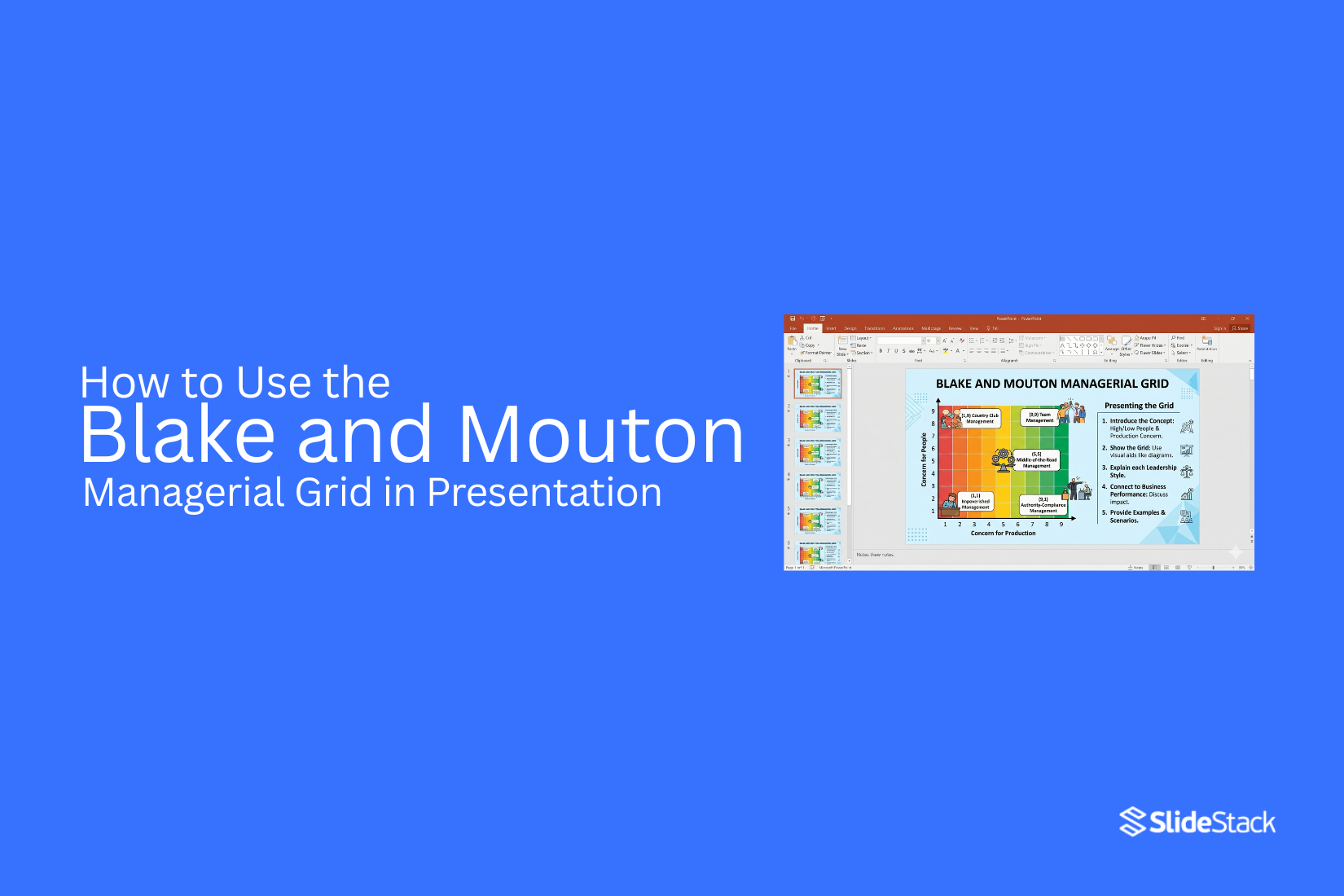
Presenting leadership ideas needs a clear structure so that an audience can follow and understand. The Blake and Mouton Managerial Grid is a simple model that shows how managers balance people and production in real work settings. It helps explain leadership styles in a clear visual way during presentations. Many trainers and managers use it because it turns complex behavior into easy points for discussion.
This article explains how to use the grid in a presentation with clear steps and practical flow. It shows how each leadership style connects to workplace outcomes and how to organize slides for better understanding. Readers can use this approach to build stronger leadership presentations and guide teams toward better decisions in meetings and training sessions.
What is the Blake and Mouton Managerial Grid?
The Blake and Mouton Managerial Grid is a leadership model that explains how managers balance two key factors in their behavior. It was developed by Robert Blake and Jane Mouton in the 1960s. The model uses a grid system to show how leadership styles change based on different levels of concern for people and concern for production. Each concern is measured on a scale from 1 to 9. The grid creates a clear map of managerial behavior by combining these two dimensions.
The first dimension focuses on concern for people. This includes trust, support, and team relationships. The second dimension focuses on concern for production. This includes results, efficiency, and task completion. Together, these dimensions form the foundation of the model. Different combinations of the two create five main leadership styles. These styles are impoverished management, authority-compliance management, country club management, middle-of-the-road management, and team management. Each style shows a different balance between people's needs and task goals.
The grid works by placing a manager on a coordinate system. One score represents concern for people. The other score represents concern for production. A low score means weak focus. A high score means strong focus. For example, a 1,1 style shows low concern for both people and production. A 9,1 style shows high production focus and low people focus. A 1,9 style shows high people focus and low production focus. A 5,5 style shows a balanced but moderate approach. A 9,9 style shows high focus on both people and production and is often seen as the most effective leadership style in the model. The grid helps organizations understand leadership behavior in a structured and measurable way.
The Five Managerial Styles Explained
Introducing the five managerial styles is a key part of a Managerial Grid presentation. Each style explains how leaders behave based on their level of concern for people and concern for production. A clear breakdown helps the audience understand how leadership choices shape team behavior and results. Each style is best presented on a separate slide to keep attention focused and reduce information overload.
Impoverished Management (1,1)
This style shows low concern for people and low concern for production. Managers in this area often stay detached from both team needs and work goals. They may avoid decisions and limit communication. This does not always mean poor intent. It can come from burnout, lack of support, or unclear authority.
Teams under this style often lack direction. Work slows down. Coordination becomes weak. Employees may feel unsure about priorities. Visual slides should reflect low engagement. Simple layouts work best. The key message is the absence of leadership involvement and its effect on stability and output.
Country Club Management (1,9)
This style reflects great concern for people and low concern for production. The focus stays on comfort, relationships, and group harmony. Managers often avoid conflict and try to keep everyone satisfied. Feedback may become soft or delayed.
This approach can build strong team relationships. It can also reduce performance pressure. Over time, results may weaken. Expectations may become unclear. Visuals should highlight friendly interaction and relaxed environments. The main idea is strong morale paired with weaker accountability and output.
Authority-Compliance Management (9,1)
This style shows great concern for production and low concern for people. Managers focus on control, structure, and efficiency. Rules are clear. Communication often flows in one direction. Tasks are closely monitored.
This approach can improve short-term output. It can also create pressure within teams. Creativity may decrease. Staff turnover can rise. Slides should use structured and formal visuals. The key point is strong task focus with limited attention to employee needs and its long-term trade-offs.
Middle-of-the-Road Management (5,5)
This style reflects moderate concern for both people and production. Managers aim for balance. They avoid extremes and focus on acceptable performance levels. Decisions often aim to satisfy both sides without pushing too far in either direction.
This can create stability. It can also limit strong progress. Performance tends to stay average. Innovation may slow down. Presentation slides should show balanced visuals. The message is compromise-driven leadership that avoids risk but may also avoid excellence.
Team Management (9,9)
This style shows great concern for both people and production. Managers focus on collaboration and shared goals. Communication is open. Expectations are clear. Accountability is shared across the team.
This style is often seen as the most effective in the model. It supports strong performance and strong relationships at the same time. It also requires trust, structure, and team maturity to work well. Slides should highlight cooperation and alignment. The key idea is that both people and results improve together when leadership is balanced at a high level on both dimensions.
Introducing the Blake and Mouton Managerial Grid to an Audience
An audience arrives with different expectations. Some want clarity. Some want practical meaning. A presenter must guide both groups at the same time. A simple opening question helps focus attention. It brings attention to how managers act in real work settings.
The Blake and Mouton Managerial Grid is introduced as a way to map leadership behavior. It shows how managers balance two core concerns. One concern is people. The other concern is results. The model places these two concerns on a simple grid. This helps the audience see patterns in leadership styles.
A clear visual reveal supports understanding. The first step shows the two axes. One axis represents concern for people. The other axis represents concern for production. Each axis is introduced slowly. This prevents confusion and reduces overload. The next step shows how different leadership styles appear on the grid. Each style sits in a different position based on balance.
The presenter should avoid absolute interpretation. The grid does not label people as fixed types. It shows behavior patterns. These patterns can change across situations. Real workplace examples help ground the idea. A manager may focus more on tasks during deadlines. The same manager may focus more on team support during onboarding. This keeps the model practical and relatable.
A common mistake is treating the grid as a strict label system. It is not a personality test. It is a behavior map. Leaders move across the grid depending on pressure, context, and team needs. This understanding prevents misinterpretation and keeps the discussion accurate.
The introduction should close by preparing the audience for deeper learning. The next step is to explore the five leadership styles. Each style shows a different balance between people and results.
Why the Managerial Grid Is Effective in Presentations
The Managerial Grid gives a clear way to show leadership styles. It uses two simple parts. One is concerned for people. The other is concern for production. This structure is easy for an audience to follow. People can see how managers behave in different situations. The message stays clear on a slide.
The model also works well with visuals. A grid chart shows position and balance in a direct way. Viewers understand the difference between leadership styles without long explanations. It also helps keep focus during a talk. The speaker can point to one area of the grid at a time. This keeps the message steady and easy to track. The idea stays simple, but the message feels complete. That balance makes the model strong for presentation use.
How to Structure a Blake and Mouton Grid Presentation
A clear structure makes your presentation easier to follow. It also helps your audience understand the leadership ideas step by step. The Blake and Mouton Managerial Grid fits well into a simple flow. Each part builds on the one before it.
Introduce the Leadership Problem
Start with a real workplace challenge. Focus on how managers often struggle to balance people and tasks. Some leaders care more about results. Others care more about team needs. This creates gaps in performance or team morale. The problem sets the stage for the grid.
Explain the Grid Framework
Next, present the Blake and Mouton Managerial Grid. Show the two axes. One axis is concern for people. The other is concern for production. Each axis has a scale from low to high. The grid creates different leadership styles based on these two factors.
Present Each Leadership Style
Move into the five main leadership styles. Explain them one by one. Cover Impoverished, Country Club, Produce or Perish, Middle of the Road, and Team Management. Keep each style simple. Focus on how each one behaves in real work situations.
Compare Leadership Outcomes
Now connect the styles to the results. Show how each leadership style affects teams and performance. Some styles lead to low motivation. Others improve trust and output. This section helps the audience see clear differences in impact.
End With Key Takeaways
Close with the main lesson. Strong leadership balances people and production. The best results come from finding that balance. This final part should be clear and easy to remember.
Best Slide Designs for Managerial Grid Presentations
A clear slide design helps people understand the Managerial Grid faster. Simple visuals work best. Too much detail makes the message harder to follow. Start with a clean grid layout. Show the two axes clearly. One axis is concern for people. The other is concern for production. Keep labels large and easy to read.
Use soft colors for the background. Keep strong colors for key points. This helps guide attention to the right areas. Next, place each leadership style in its own slide. Focus on one style at a time. This keeps the message simple and direct. Use icons to show meaning. A people icon can show team focus. A factory or gear icon can show task focus. Icons make ideas easier to remember.
Add short text only. One idea per line works best. Long text blocks reduce focus. Charts should stay simple. Avoid extra lines or effects. Clean lines make the grid easier to understand. Keep spacing open. White space helps the eyes rest. It also improves clarity during presentations. End with a summary slide. Show all styles in one view. This helps the audience connect everything together.
Designing a Presentation Around the Five Leadership Styles
Now that the managerial grid is understood, the next step is building a clear presentation structure. The goal is to show the five leadership styles in a way that is easy to follow. Each style should feel like part of one system. The presentation should move in a steady order from one style to the next.
The presentation should begin with a short introduction to the grid. After that, each leadership style should be shown in its own section. Every section should follow the same structure. This keeps the content clear and easy to compare.
The best slide layout follows this sequence:
• Define the style in simple terms.
• Describe common behaviors linked to the style.
• Give a clear work example.
• Explain strengths and limits of the style.
This structure keeps all five styles consistent. Each slide should use the same layout and visual design. This helps the audience recognize the pattern across all sections. It also reduces confusion and keeps attention on the content.
Transitions between styles also matter. After each style, a short comparison slide can show how it relates to the others. For example, placing a task-focused style next to a people-focused style helps show the difference in approach. This makes it easier to see how each leadership style changes across the grid.
Examples of Blake and Mouton Grid Presentations
A clear example helps people see how the model works in real situations. The Blake and Mouton Managerial Grid shows leadership styles using two factors. One cares for people. The other is focused on tasks. A presentation can show a manager who scores low on both sides. This type of leader avoids decisions and gives little direction. Slides can use a simple grid with the point placed near the bottom-left corner.
Another example can show high task focus, but low people focus. This leader pushes for results but pays little attention to team needs. A chart can highlight this with the point placed near the top-left area. A third case can show high people focus but low task focus. This leader supports the team but lacks strong structure. The point sits near the bottom-right area on the grid.
A balanced example can sit near the center of the grid. This shows equal attention to people and tasks. A presentation slide can use color markers to compare all four examples side by side. These examples help the audience see clear differences in leadership styles. The grid becomes easier to read and apply in real situations.
Common Mistakes in Managerial Grid Presentations
Many presentations skip the meaning of the two axes. The audience does not learn them well. Slides often have too much text. People stop reading. The grid appears without clear labels. This creates confusion. Managers are placed on the grid without reasons. The choice feels random. Real examples are missing. The idea stays abstract.
Tips to Make Leadership Presentations More Engaging
Good presentations keep the audience focused. The Blake and Mouton Managerial Grid works best when the message is clear and simple. Small changes in how you present can improve attention and understanding.
Keep these tips in mind:
• Use one idea per slide. Do not overload slides with text.
• Keep words short and clear. Avoid long explanations on slides.
• Show the grid in a simple layout. Make labels easy to read.
• Point to each part of the grid while speaking. This helps focus.
• Use real work examples. This helps people connect with the idea.
• Ask short questions to the audience. This keeps attention active.
• Keep colors light and clean. Do not use too many design styles.
• Practice your timing. Speak slowly and pause between points.
Final Notes
The core model rests on two leadership behavior dimensions. One dimension is concern for people. The other dimension is concern for production. These two axes form a simple structure for understanding leadership styles.
This structure supports use in presentations through a clear visual layout. It gives a shared language for discussing leadership behavior. It also helps audiences see differences between styles in a direct way.
The model does not set fixed categories for leaders. It does not define strict or permanent labels. It also does not guide leaders toward a single correct style. Its role stays descriptive rather than prescriptive.
This approach supports clearer analysis of leadership behavior. It encourages structured discussion in academic and professional settings. It also supports flexible thinking about how leadership actions change across situations.
FAQs
What is the purpose of the Blake and Mouton Managerial Grid in presentations?
A leadership communication specialist uses it to explain leadership behavior. It shows how managers balance task focus and people focus. It helps audiences see different leadership styles in a clear way.
How should the grid be positioned in a presentation?
A presentation strategist places it as a core visual model. It sits after a short introduction. It sets the base for all later explanations of leadership styles.
Is the grid used for diagnosis or explanation?
A presentation strategist treats it as an explanation tool. It helps describe leadership behavior patterns. It also supports comparison between styles in a structured way.
How should slides be assigned for each part of the grid?
Each leadership style receives its own slide or slide pair. One slide shows the style name. The next slide explains behavior and results. This keeps the message clear and direct.
How does the grid adapt to different audiences?
For students, the focus stays on simple definitions. For managers, examples from workplace settings are added. For mixed groups, both clarity and examples are balanced.
How is the scoring system explained in presentations?
The scoring system uses two axes. One axis shows concern for people. The other axis shows concern for production. Each style sits at a different point on the grid based on these two measures.
What sequence works best when presenting the grid?
A logical flow starts with the model overview. Then each leadership style is shown one by one. The session ends with a comparison of all styles to show differences in behavior.


You may also be interested in ...

How To Create An Eye-Catching Portfolio
If you’re looking to create an eye-catching portfolio, this post will come in handy. In this article, you can find the easies...
23 Jun, 2024

How To Easily Create An Infographic
Infographics are the perfect way to make a presentation that will impact an audience, but their design and composition might...
08 Jun, 2024

PowerPoint Template Tips & Tricks You Ne...
PowerPoint seems to be an unknown world for many people, especially those who have been assigned to create a presentation out...
08 Jun, 2024